
Man’s savings wiped in $80m global investment scam
News.com.au reports on Jason and Harriet’s cases
Read the storySCAM WARNING: Scam Victim Alliance does not provide recovery services or endorse any company that claims to recover your funds. If you receive communication from anyone claiming to work on our behalf, please contact onboarding@scamvictimalliance.com
 JOIN
JOIN


News.com.au reports on Jason and Harriet’s cases
Read the story
Major newspaper coverage
Read the story
Magazine and technology media coverage
Read it in AWW
SBS On Demand
Stream free
ABC Listen and ABC news
Read and listen
The Advertiser
Read story
Carers guide
Read story
ABC Listen and ABC news
Read and listen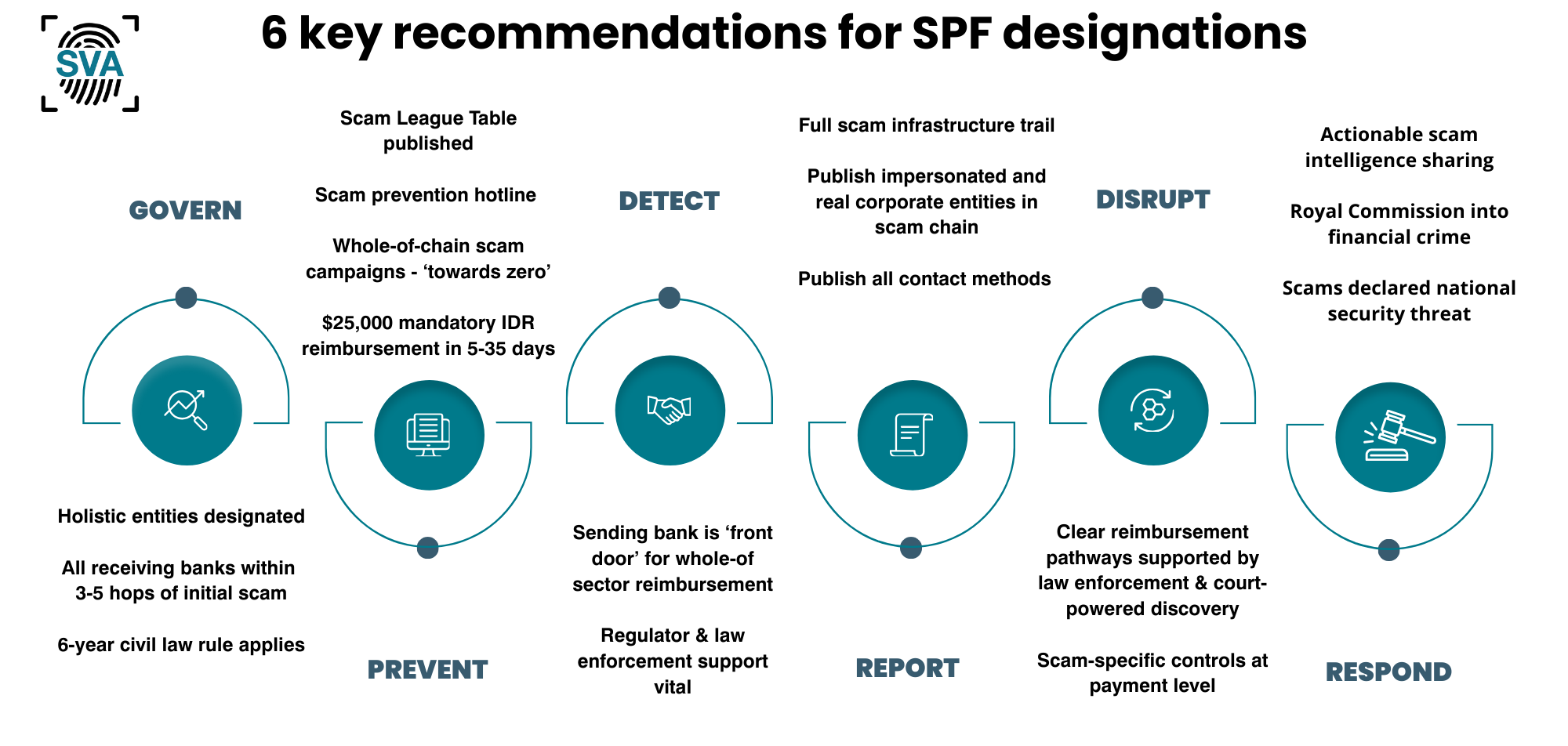
Scam Victim Alliance has 6 key recommendations to stop public policy entrenching the harm of scams in response to Treasury’s SPF codes and designations.

Scam Victim Alliance urges Treasury to maintain cash as a protected pathway for consumers to transact safely.

Scam Victim Alliance urges Treasury to mandate reimbursement, fund asset recovery, and expand crypto regulation, warning that reform without restitution fails victims and emboldens financial criminals.

The Scam Victim Alliance submission to the Reserve Bank

The Scam Victim Alliance advocates for 5 key reforms to reduce the financial and emotional harm experienced by people who fall victim to cyber-enabled deceptions and crime.
SVA advocates for scam victims to be able to check that financial intelligence agencies have received appropriate suspicious matter reports from financial institutions after financial crime or money laundering.

Financial complaints bodies need stronger powers to hear complaints against receiving banks. This is what Scam Victim Alliance asks complaint schemes to consider.
Complaint Scheme Reform
Before Scam Victim Alliance formalised as a not-for-profit, we asked politicians standing in the federal election what they would do for scam victims.
Election Commitment PaperScam Victim Alliance has 6 key recommendations to stop public policy entrenching the harm of scams in response to Treasury’s SPF codes and designations.
Scam Victim Alliance urges Treasury to mandate reimbursement, fund asset recovery, and expand crypto regulation, warning that reform without restitution fails victims and emboldens financial criminals.
SVA advocates for scam victims to be able to check that financial intelligence agencies have received appropriate suspicious matter reports from financial institutions after financial crime or money laundering.
Before Scam Victim Alliance formalised as a not-for-profit, we asked politicians standing in the federal election what they would do for scam victims.
Election Commitment PaperScam Victim Alliance urges Treasury to maintain cash as a protected pathway for consumers to transact safely.
The Scam Victim Alliance submission to the Reserve Bank
The Scam Victim Alliance advocates for 5 key reforms to reduce the financial and emotional harm experienced by people who fall victim to cyber-enabled deceptions and crime.
Financial complaints bodies need stronger powers to hear complaints against receiving banks. This is what Scam Victim Alliance asks complaint schemes to consider.
Complaint Scheme Reform
Impersonation is too easy. Digital Trust Exchange was supposed to be live at the beginning of 2025 - hurry up!

Stop banks and payment platforms enabling mule bank, crypto and foreign currency exchange accounts.

Money laundering helps scammers turn illegal profits into "clean" money that looks legal. Stop placement and layering of scammed money across borders.
Banks, regulators and law-enforcement must unite to stop the mule bank account getaway cars stealing scammed money for transnational criminal groups who identify as legitimate business people.
From dealing with law enforcement to seeking justice from banks, regulators and complaints bodies, victims urgently need trained, trauma-informed responders to stop perpetuating the harm a cyber-enabled crime victim experiences.
Large transactions like term deposits, retirement-savings rollovers and home purchases used to be protected by slower payment systems. Electronic payments have no such protections - slow them down to 48 hours!
Financial institutions must be transparent about why they cannot recover scammed funds and stop forcing victims to fund expensive civil court discovery processes to find out what happened to their stolen money. Financial intelligence agencies need to match scammed and stolen funds with suspicious matter reports so victims are assured their stolen money is not adding to the global harms of cyber-enabled crime.
Consumer laws and protections against financial harms have been undermined by payment rules built for a different age. The concepts of ‘mistaken payment’ and ‘authorised payment’ need urgent re-examination.
The crimes of identity theft, fraud, obtaining funds by deception and money laundering are embedded in criminal law, yet complaint pathways often ignore this. Ending deceptive practices exploited across technology, social media, telco and government-issued identity documents will help end the scourge of industrial-scale scamming.
Financial institutions and payment platforms must be accountable for exact matches between names and account numbers in the same way they are when a BSB number is incorrect.